
Welcome! Unlock Your First Offer Here
Welcome! Unlock Your First Offer Here
Welcome Partners! Talk to us, Unlocking A Booming Market!
Welcome Partners! Talk to us, Exploring a High-Potential Market!
Leave Your Questions, Expert Support At Your Service!
Redefine a Comfortable Sofa


How Do Furniture Manufacturers Design Products for Compression Packaging?
Many furniture products are designed mainly around comfort, appearance, and durability. However, compression-ready furniture requires a different development approach.
Compression is not simply a method of reducing product volume. The real challenge is whether the furniture can maintain its original function, appearance, and performance after compression, transportation, and recovery.
Compression-ready furniture is developed by considering function, recovery performance, and shipping requirements from the beginning of the design process. Manufacturers need to evaluate product suitability, shape, internal structure, upholstery materials, compression methods, and packaging solutions together.
The first consideration in compression furniture development is not how much a product can be compressed, but whether compression makes sense for its intended function.
Furniture products suitable for compression usually share several characteristics:
This is why compression-ready furniture applications are currently concentrated in soft furniture categories, such as mattresses, sofas, and upholstered seating products.
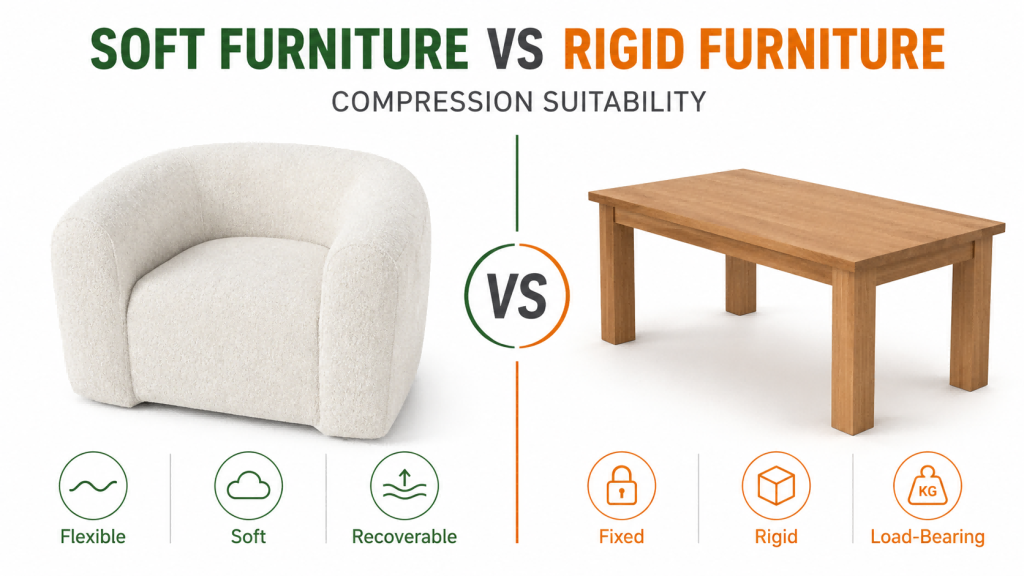
These products rely on flexible materials that can temporarily change shape during transportation and recover after unpacking.
If softness and flexibility are not part of the product function, compression usually becomes difficult or unnecessary.
For example, tables, cabinets, and other rigid furniture products usually require:
Their core function depends on maintaining a rigid form, making them less suitable for compression packaging.
Therefore, compression is not only a packaging decision. It starts with understanding whether the furniture itself is suitable for volume reduction while maintaining its intended purpose.
After determining that a product is suitable for compression, manufacturers need to evaluate its overall shape and dimensions.
Product shape directly affects:
Manufacturers may consider:
A product with a more flexible shape or separated components may provide more packaging possibilities than a fully integrated structure.
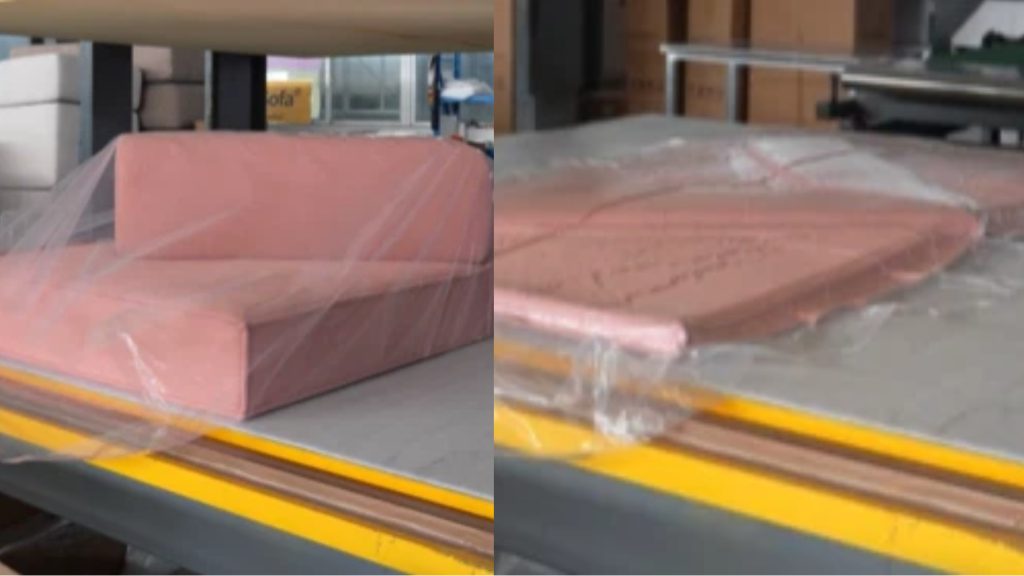
For upholstered furniture, manufacturers also need to consider whether the product can form a stable package after compression. Irregular shapes, unnecessary gaps, or fixed protruding components may reduce packaging efficiency.
However, the goal is not to make a product as small as possible. The goal is to create a practical compressed package while maintaining the original user experience after unpacking.
Internal structure is one of the most important factors manufacturers evaluate when developing compression-ready furniture.
A compression-ready product needs to withstand pressure during transportation while recovering its intended shape after unpacking.
Manufacturers need to consider:
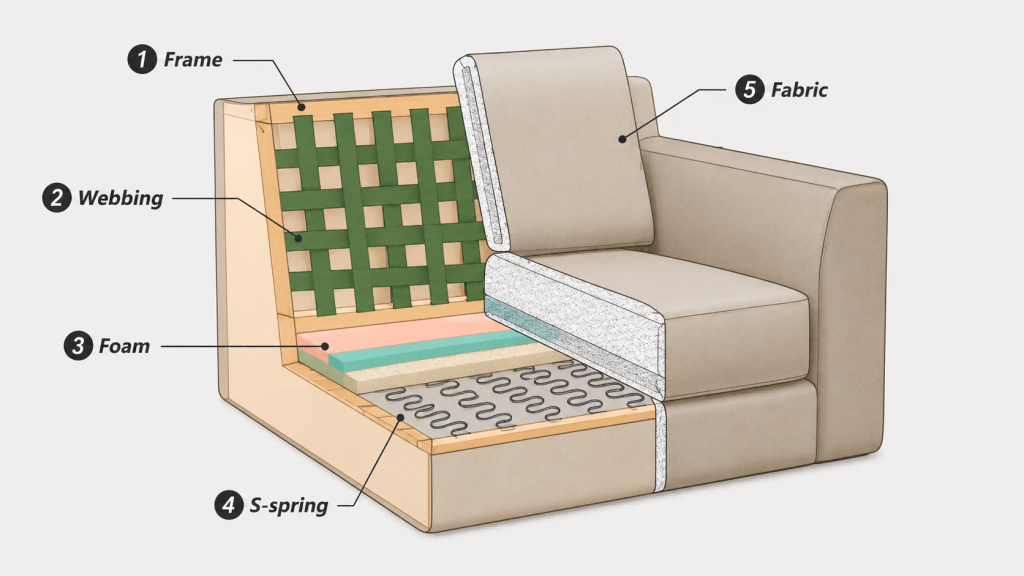
Cushioning materials directly influence:
Foam is commonly used in compressed sofas and other upholstered furniture because it provides flexibility and recovery characteristics suitable for volume reduction.
Foam density is one of the factors manufacturers consider when developing compressed sofas, as it directly affects compression ratio and recovery performance.
Different foam densities and formulations may affect how a product responds during compression and how quickly it returns to its original shape.
Different furniture designs may require different internal support solutions.
Depending on product requirements, manufacturers may consider:
The key consideration is whether these components can maintain their function after compression and recovery.
A successful compression-ready product is not determined by one individual material. It depends on how the complete structure works together.
The outer upholstery material is another important consideration during compression-ready furniture development.
During compression, storage, and transportation, upholstery materials may experience:
Manufacturers need to consider:
A fabric that performs well in traditional furniture applications may not always be suitable for compression packaging.
For compression-ready furniture, upholstery materials need to balance visual appearance with practical performance. Fabric selection should therefore be considered during the early product development stage rather than after the structure has already been finalized.
Compression methods and packaging solutions should be considered together with product development.
The selected approach depends on product characteristics, including:
Different compression methods affect:
A product designed for vacuum compression needs materials and structures that can withstand pressure while returning to their intended shape after unpacking.
Packaging is also an important part of compression-ready furniture development. Manufacturers also need to consider carton design and shipping efficiency when developing compression-ready products.

Manufacturers need to evaluate:
These packaging considerations are also evaluated through pre-shipment distribution testing, which helps determine whether packaged products can withstand different transportation conditions.
A well-designed packaging solution can reduce logistics challenges while protecting product quality during international shipping.
Compression packaging is not simply a method of reducing furniture volume. It is a product development process that begins with evaluating function, shape, internal structure, upholstery materials, and packaging requirements.
The most successful compression-ready furniture products are designed to balance transportation efficiency with comfort, appearance, and long-term performance.
As a compressed sofa manufacturer, Popup Sofa helps importers evaluate whether soft furniture products are suitable for compression and develop practical solutions from structure design and material selection to compression testing and export packaging.


